Draft Micromobility Strategy Recommendations (Part 1)
Where should e-bikes and e-scooters be allowed to operate?
Below is a list of common active transportation facilities and draft recommendations for where e-bikes and e-scooters should be allowed. These recommendations are based on regulations from other cities such as Vaughan, Richmond Hill, and Toronto.
| Draft Recommendations | ||
|
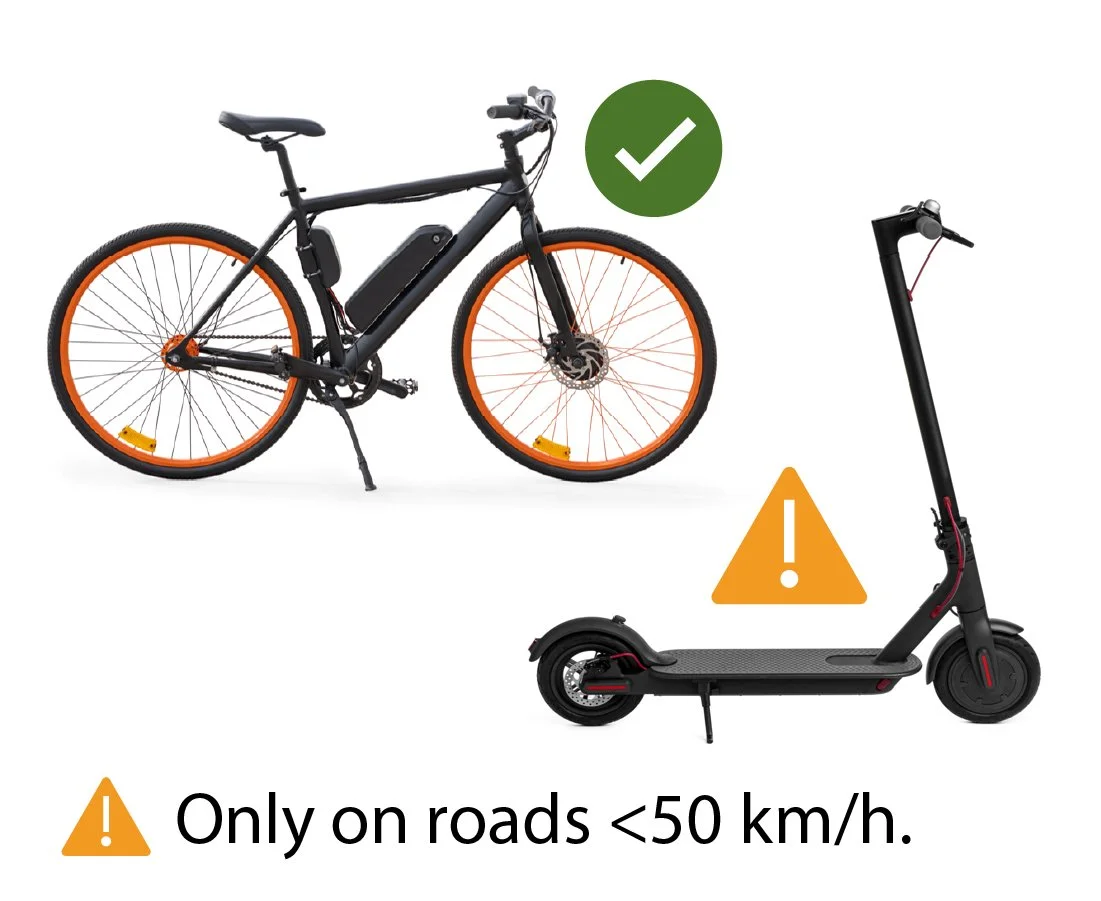
Shared Roadways
All vehicles mix together to use the roadway. Typically, the speed limit is <50 km/h. |
|
|
|
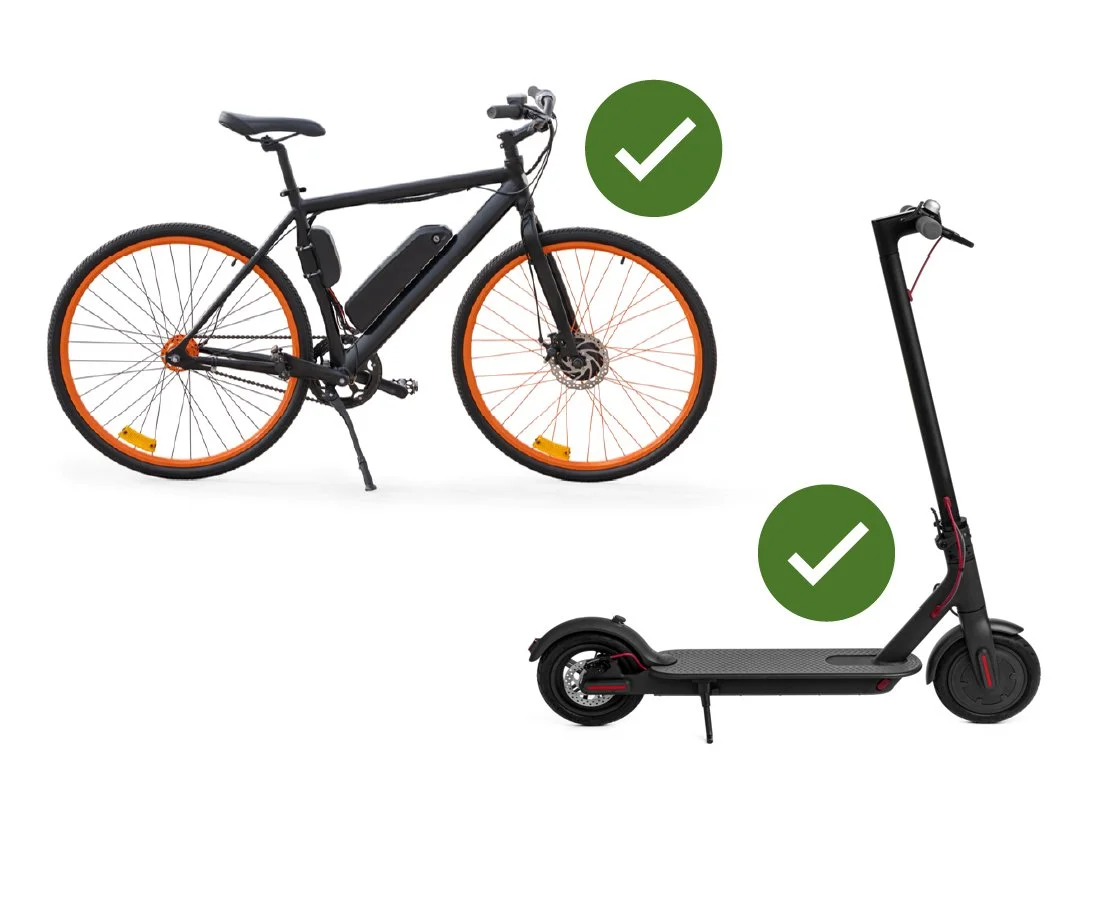
Bike Lanes
Bikes, e-bikes and e-scooters travel on the road, but are separated from cars by pavement markings, signs, or bollards. |
|
|
|
Cycle Tracks
Bikes, e-bikes, and e-scooters travel beside the road, separated from cars by a curb and horizontal buffer. |
|
|
|
Multi-Use Paths (MUPs)
Pedestrians and micromobility devices share these paths, which run beside the road but are separated from cars by a curb and strip of grass. |
|
|
|
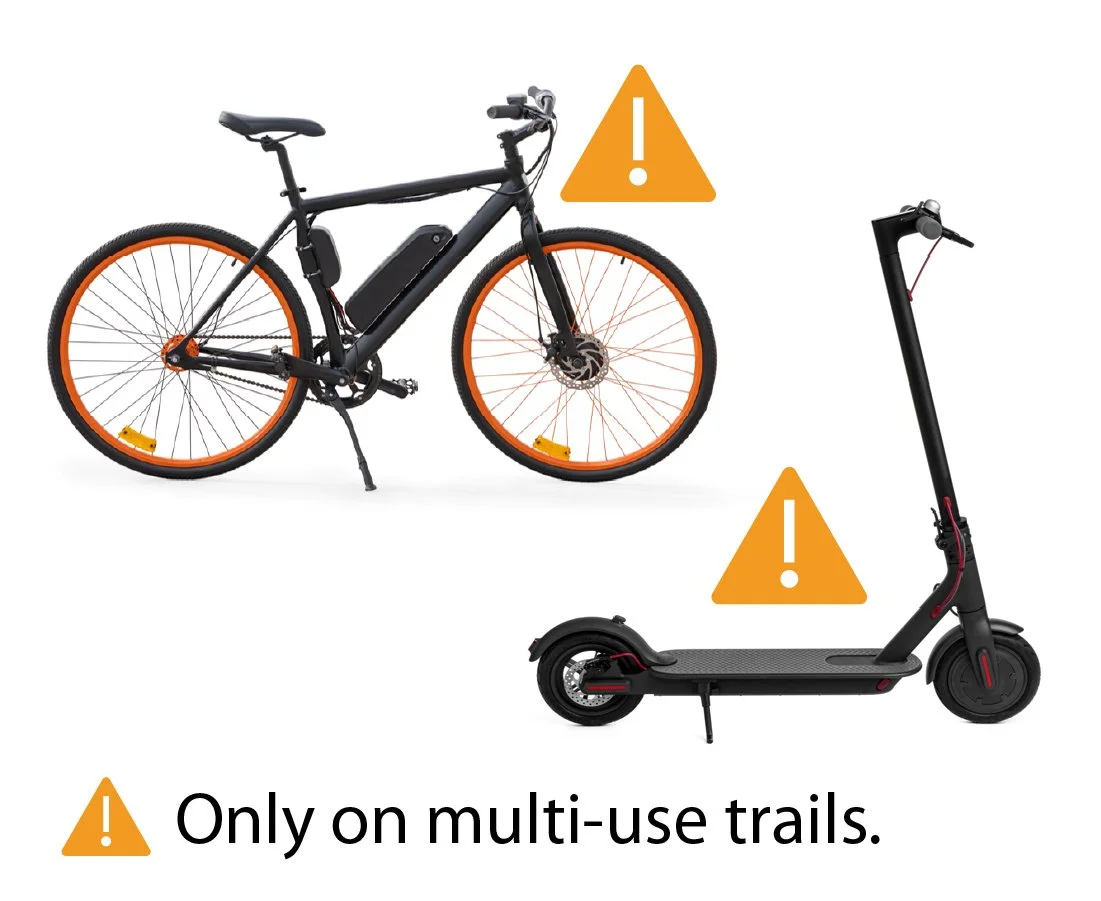
Multi-Use Trails (MUTs)
Similar to MUPs and are paved, but do not follow the same path as a road. Can be multi-use or pedestrian-only. |
|
|